Búsqueda avanzada
Buscar
 

Entra en BiblioEteca...

Disfruta de todo el potencial de biblioEteca entrando con tu usuario...


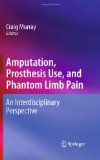
AMPUTATION, PROSTHESIS USE, AND PHANTOM LIMB PAIN


AUTOR: ; ND
 
 
  • Portada de AMPUTATION, PROSTHESIS USE, AND PHANTOM LIMB PAIN

    9780387874616

 
Compartir: Compartir con un amigo de biblioeteca Compartir por email Compartir en Facebook Compartir en X Capturar código QR Añadir RSS

Sinópsis del libro:

  • The book will contain contributions from the fields of anthropology, biomedical engineering, computer science, neuroscience, nursing, prosthetics and orthotics, psychology, and rehabilitative medicine. It will be comprised of three broad interrelated sections. Following an introductory chapter in which the topics and chapters of the book are overviewed, the first section ("Providing and Monitoring the Use of Prostheses") will concentrate on the work of prostheticians and will consist of three chapters. The first of these, written by a clinician responsible for the provision of prosthetics in a large regional area of the UK, will present a range of ethical and medico-legal issues for rehabilitation professionals in the supply and withdrawal of prostheses and assistive technology for people with limb loss or deformity. The second chapter, provided by a prosthetician and prosthetic engineers, will present the development of an innovative computerized technique for monitoring upper limb prosthesis activity. The final chapter in this section is written by an anthropologist, himself an amputee, presenting ethnographic work on how prostheticians and their clients actually "go about" providing artificial limbs. Together these chapters explicate the processes involved in prostheticians? work with clients in a manner which will be of interest to students and professionals from a range of disciplines.

    Section 2 ("The Experience and Meaning of Prosthesis Use") focuses on the experiences and meanings of prosthesis users themselves. The first of three chapters, written by members of the Dublin Psychoprothetics Group, explores the ways in which people adapt and cope with limb loss and using a prosthesis, the potential for positive adjustment and strengths emerging from the experience, pain, affective distress, issues around identity, body image, and the construction of self and quality of life. It also considers the importance of these issues for health service providers across the multidisciplinary team who work with people with limb loss. The second chapter provides a reflective critique of the themes in the book, namely, the process of prosthetic rehabilitation, by way of a reprint of Gelya Frank?s classic paper "Beyond Stigma: Visibility and Self-Empowerment of Persons with Congenital Limb Deficiencies," along with a new commentary from the author herself. This chapter focuses on the experiences of people born with congenital limb deficiencies who have chosen not to use prosthetics as part of a strategy to counteract the stigmatization of disability and bodily difference. The views of these participants provide challenges to a range of professionals involved in the rehabilitation of people with amputations and limb deficiencies. The final chapter of this section presents a range of themes in the experiences of people who choose to use prosthetics following amputation or limb absence, including the embodied used of prosthesis and the integration of these into the identity of the persons concerned.

    The final section (postoperative pain and new treatments of phantom limb pain) focuses on phantom limb pain and emerging therapies for this phenomenon. The first of four chapters presents a clinician?s account of post amputation pain, stressing how this is temporally dependent, varying at different stages of the perioperative/postoperative period, with possibly more than one pain being present at any time. In considering the complex amalgam of pain contributors the author argues for a full biopsychosocial assessment to be made with attention and treatment given to any associated mood disorder, disorder of cognition or behavioral maladaptations. These considerations are developed further in the following chapter where, written from a nursing perspective, the coping style of patients in relation to phantom limb pain are discussed and compared with other pain conditions. The final two chapters in this section present two emerging therapies for phantom limb pain which have received particular academic and media attention. This condition is notoriously difficult to treat, and the two chapters included here present the emergence of exciting new therapies. The first of these, written from a neuropsychological and nursing perspective, discusses the potential of mental imagery in the treatment of phantom limb pain and associated cortical reorganization in the brain. The authors report on a mental imagery training program for patients, based at the Pain Research Institute in Liverpool. Patients with phantom limb pain have reported a significant reduction in the intensity and unpleasantness of constant pain and exacerbations. The last chapter presents the emergence of virtual reality therapy, involving the collaboration of psychologists and computer scientists, and focuses principally on the work of the Advanced Interface Group at Manchester using immersive virtual reality as a visual therapy for the treatment of phantom limb pain.

    Idioma: INGLÉS


Clasificador

Según nuestros usuarios

RIGUROSO
Riguroso

Determina lo preciso o impreciso que es este libro con respecto a lo que se cuenta en el mismo. 0 significa que es completamente impreciso y 10 que cuenta es rigurosamente verídico

Más información
DIVERTIDO
Divertido

Determina lo divertido que te ha resultado el libro: 0-aburrido 10-muy divertido

Más información
COMPLEJO
Complejo

Determinamos lo complejo que nos ha resultado la lectura del libro. Desde el nivel más bajo, que indica que es un texto secillo de comprender hasta el valor máximo que indica que es complejo de comprender

Más información
SORPRENDE
Sorprende

Indica lo sorprendente que resulta el argumento del libro, desde 0: previsible hasta 10: totalmente desconcertante y sorprendente

Más información


Etiquetas de otros usuarios

Así han etiquetado este libro más usuarios

Así han etiquetado otros usuarios este libro. Si ves acertada su elección puedes añadir la etiqueta con un simple clic a tus etiquetas



Comentarios de los lectores


Yo Leo

Información para lectores

Anillo de blogs

¿Tienes un blog?

Paga si te gusta

La forma de pago del futuro...

BiblioEtecarios

Ayudanos con los libros

Yo Escribo

Si eres autor, descubre más...

Ayuda

Todo lo que puedes hacer en la web
C/ Mayor, 50, 2C.
28921 Alcorcón (Madrid)
Tel/Fax : 91 288 73 76
E-mail : info@biblioeteca.com

BiblioEteca en Rss

 
Copyright © 2026 BiblioEteca Technologies SL - Todos los derechos reservados