Búsqueda avanzada
Buscar
 

Entra en BiblioEteca...

Disfruta de todo el potencial de biblioEteca entrando con tu usuario...


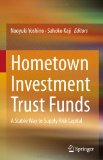
HOMETOWN INVESTMENT TRUST FUNDS


AUTOR: ; ND
 
 
  • Portada de HOMETOWN INVESTMENT TRUST FUNDS

    9784431543084

 
Compartir: Compartir con un amigo de biblioeteca Compartir por email Compartir en Facebook Compartir en X Capturar código QR Añadir RSS

Sinópsis del libro:

  • This book records the first success stories of a new form of financial intermediation, the hometown investment fund, that has become a national strategy in Japan, partly to meet the need to finance small and medium-sized enterprises (SMEs) after the devastating earthquake and tsunami in March 2011.

    The hometown investment fund has three main advantages. First, it contributes to financial market stability by lowering information asymmetry. Individual households and firms have direct access to information about the borrowing firms, mainly SMEs, that they lend to. Second, it is a stable source of risk capital. The fund is project driven. Firms and households decide to invest by getting to know the borrowers and their projects. In this way the fund distributes risk but not so that it renders risk intractable, which was the problem with the ?originate and distribute? model. Third, it contributes to economic recovery by connecting firms and households with SMEs that are worthy of their support. It also creates employment opportunities, at the SMEs as well as for the pool of retirees from financial institutions who can help assess the projects.

    Introduction of the hometown investment fund has huge global implications. The world is seeking a method of financial intermediation that minimizes information asymmetry, distributes risk without making it opaque, and contributes to economic recovery. Funds similar to Japan?s hometown investment fund can succeed in all three ways. After all, the majority of the world?s businesses are SMEs. The first chapter explains the theory behind this method, and the following chapters relate success stories from Japan and other parts of Asia. This book should encourage policymakers, economists, lenders, and borrowers, especially in developing countries, to adopt this new form of financial intermediation, thus contributing to global economic stability.

    Idioma: INGLÉS


Clasificador

Según nuestros usuarios

RIGUROSO
Riguroso

Determina lo preciso o impreciso que es este libro con respecto a lo que se cuenta en el mismo. 0 significa que es completamente impreciso y 10 que cuenta es rigurosamente verídico

Más información
DIVERTIDO
Divertido

Determina lo divertido que te ha resultado el libro: 0-aburrido 10-muy divertido

Más información
COMPLEJO
Complejo

Determinamos lo complejo que nos ha resultado la lectura del libro. Desde el nivel más bajo, que indica que es un texto secillo de comprender hasta el valor máximo que indica que es complejo de comprender

Más información
SORPRENDE
Sorprende

Indica lo sorprendente que resulta el argumento del libro, desde 0: previsible hasta 10: totalmente desconcertante y sorprendente

Más información


Etiquetas de otros usuarios

Así han etiquetado este libro más usuarios

Así han etiquetado otros usuarios este libro. Si ves acertada su elección puedes añadir la etiqueta con un simple clic a tus etiquetas



Comentarios de los lectores


Yo Leo

Información para lectores

Anillo de blogs

¿Tienes un blog?

Paga si te gusta

La forma de pago del futuro...

BiblioEtecarios

Ayudanos con los libros

Yo Escribo

Si eres autor, descubre más...

Ayuda

Todo lo que puedes hacer en la web
C/ Mayor, 50, 2C.
28921 Alcorcón (Madrid)
Tel/Fax : 91 288 73 76
E-mail : info@biblioeteca.com

BiblioEteca en Rss

 
Copyright © 2026 BiblioEteca Technologies SL - Todos los derechos reservados