Búsqueda avanzada
Buscar
 

Entra en BiblioEteca...

Disfruta de todo el potencial de biblioEteca entrando con tu usuario...


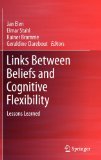
LINKS BETWEEN BELIEFS AND COGNITIVE FLEXIBILITY


AUTOR: ; ND
 
 
  • Portada de LINKS BETWEEN BELIEFS AND COGNITIVE FLEXIBILITY

    9789400717923

 
Compartir: Compartir con un amigo de biblioeteca Compartir por email Compartir en Facebook Compartir en X Capturar código QR Añadir RSS

Sinópsis del libro:

  • With the world and its structures becoming ever more complex, and the nature of future employment becoming ever more unpredictable, the notion of ?cognitive flexibility? has a high profile in educational and psychological debate. The contributions in this volume analyze the nature of cognitive flexibility, as well as the impact of different types of beliefs on cognitive flexibility.

    Making adequate decisions requires considering input from a variety of continuously evolving sources rather than adhering to predetermined procedures. Adopting a position in a debate necessitates the critical evaluation of different alternatives, while solving a problem entails selecting appropriate problem-solving strategies. Meanwhile, studying requires students to integrate a range of interventions, and treating a patient involves making a differential diagnosis. The common factor, cognitive flexibility, lies at the core of effective functioning in complex, domain-specific environments.

    Cognitive flexibility can be described as the disposition to consider diverse information elements while deciding on how to solve a problem or to execute a learning-related task in a variety of domains. The concept of ?disposition? implies that individuals will not always demonstrate cognitive flexibility even if they are in principle able to act in a cognitively flexible way. The notion does not require that alternatives are always deliberately considered, which is why this volume?s tandem discussion of beliefs is key element of the discussion. Beliefs play a central role in cognitive flexibility and relate to what individuals consider to be important, valid and/or true. Of specific interest is the relationship between epistemological beliefs and cognitive flexibility, especially as a particular subset of epistemological beliefs seems to be a prerequisite to a cognitively flexible disposition.

    Idioma: INGLÉS


Clasificador

Según nuestros usuarios

RIGUROSO
Riguroso

Determina lo preciso o impreciso que es este libro con respecto a lo que se cuenta en el mismo. 0 significa que es completamente impreciso y 10 que cuenta es rigurosamente verídico

Más información
DIVERTIDO
Divertido

Determina lo divertido que te ha resultado el libro: 0-aburrido 10-muy divertido

Más información
COMPLEJO
Complejo

Determinamos lo complejo que nos ha resultado la lectura del libro. Desde el nivel más bajo, que indica que es un texto secillo de comprender hasta el valor máximo que indica que es complejo de comprender

Más información
SORPRENDE
Sorprende

Indica lo sorprendente que resulta el argumento del libro, desde 0: previsible hasta 10: totalmente desconcertante y sorprendente

Más información


Etiquetas de otros usuarios

Así han etiquetado este libro más usuarios

Así han etiquetado otros usuarios este libro. Si ves acertada su elección puedes añadir la etiqueta con un simple clic a tus etiquetas



Comentarios de los lectores


Yo Leo

Información para lectores

Anillo de blogs

¿Tienes un blog?

Paga si te gusta

La forma de pago del futuro...

BiblioEtecarios

Ayudanos con los libros

Yo Escribo

Si eres autor, descubre más...

Ayuda

Todo lo que puedes hacer en la web
C/ Mayor, 50, 2C.
28921 Alcorcón (Madrid)
Tel/Fax : 91 288 73 76
E-mail : info@biblioeteca.com

BiblioEteca en Rss

 
Copyright © 2026 BiblioEteca Technologies SL - Todos los derechos reservados