Búsqueda avanzada
Buscar
 

Entra en BiblioEteca...

Disfruta de todo el potencial de biblioEteca entrando con tu usuario...


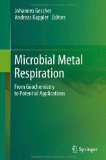
MICROBIAL METAL RESPIRATION


AUTOR: ; ND
 
 
  • Portada de MICROBIAL METAL RESPIRATION

    9783642328664

 
Compartir: Compartir con un amigo de biblioeteca Compartir por email Compartir en Facebook Compartir en X Capturar código QR Añadir RSS

Sinópsis del libro:

  • Microbes can respire on metals. This seemingly simple finding is one of the major discoveries that were made in the field of microbiology in the last few decades. The importance of this observation is evident. Metals are highly abundant on our planet. Iron is even the most abundant element on Earth and the forth most abundant element in the Earth?s crust. Hence, in some environments iron, but also other metals or metalloids, are the dominant respiratory electron acceptors. Their reduction massively drives the carbon cycle in these environments and establishes redox cycles of the metallic electron acceptors themselves. These redox cycles are not only a driving force for other biotic reactions but are furthermore necessary for initiating a number of geochemically relevant abiotic redox conversions. Although widespread and ecologically influential, electron transfer onto metals like ferric iron or manganese is biochemically challenging. The challenge is to transfer respiratory electrons onto metals that occur in nature at neutral pH in the form of metal oxides or oxihydroxides that are effectively insoluble. Obviously, it is necessary that the microbes specially adapt in order to catalyze the electron transfer onto insoluble electron acceptors. The elucidation of these adaptations is an exciting ongoing process. To sum it up, dissimilatory metal reduction has wide-spread implications in the field of microbiology, biochemistry and geochemistry and its discovery was one of the major reasons to establish a novel scientific field called geomicrobiology. Recently, the discovery of potential applications of dissimilatory metal reducers in bioremediation or current production in a microbial fuel cell further increased the interest in studying microbial metal reduction.

    Idioma: INGLÉS


Clasificador

Según nuestros usuarios

RIGUROSO
Riguroso

Determina lo preciso o impreciso que es este libro con respecto a lo que se cuenta en el mismo. 0 significa que es completamente impreciso y 10 que cuenta es rigurosamente verídico

Más información
DIVERTIDO
Divertido

Determina lo divertido que te ha resultado el libro: 0-aburrido 10-muy divertido

Más información
COMPLEJO
Complejo

Determinamos lo complejo que nos ha resultado la lectura del libro. Desde el nivel más bajo, que indica que es un texto secillo de comprender hasta el valor máximo que indica que es complejo de comprender

Más información
SORPRENDE
Sorprende

Indica lo sorprendente que resulta el argumento del libro, desde 0: previsible hasta 10: totalmente desconcertante y sorprendente

Más información


Etiquetas de otros usuarios

Así han etiquetado este libro más usuarios

Así han etiquetado otros usuarios este libro. Si ves acertada su elección puedes añadir la etiqueta con un simple clic a tus etiquetas

 
Publicidad Baliza v16 Baliza v16


Comentarios de los lectores


Yo Leo

Información para lectores

Anillo de blogs

¿Tienes un blog?

Paga si te gusta

La forma de pago del futuro...

BiblioEtecarios

Ayudanos con los libros

Yo Escribo

Si eres autor, descubre más...

Ayuda

Todo lo que puedes hacer en la web
C/ Mayor, 50, 2C.
28921 Alcorcón (Madrid)
Tel/Fax : 91 288 73 76
E-mail : info@biblioeteca.com

BiblioEteca en Rss

 
Copyright © 2026 BiblioEteca Technologies SL - Todos los derechos reservados