Búsqueda avanzada
Buscar
 

Entra en BiblioEteca...

Disfruta de todo el potencial de biblioEteca entrando con tu usuario...


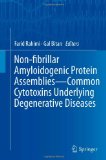
NON-FIBRILLAR AMYLOIDOGENIC PROTEIN ASSEMBLIES - COMMON CYTOTOXINS UNDERLYING DEGENERATIVE DISEASES


AUTOR: ; ND
 
 
  • Portada de NON-FIBRILLAR AMYLOIDOGENIC PROTEIN ASSEMBLIES - COMMON CYTOTOXINS UNDERLYING DEGENERATIVE DISEASES

    9789400727731

 
Compartir: Compartir con un amigo de biblioeteca Compartir por email Compartir en Facebook Compartir en X Capturar código QR Añadir RSS

Sinópsis del libro:

  • Amyloid-forming proteins are implicated in over 30 human diseases. The proteins involved in each disease have unrelated sequences and dissimilar native structures, but they all undergo conformational alterations to form fibrillar polymers. The fibrillar assemblies accumulate progressively into disease-specific lesions in vivo. Substantial evidence suggests these lesions are the end state of aberrant protein folding whereas the actual disease-causing culprits likely are soluble, non-fibrillar assemblies preceding the aggregates. The non-fibrillar protein assemblies range from small, low-order oligomers to spherical, annular, and protofibrillar species. Oligomeric species are believed to mediate various pathogenic mechanisms that lead to cellular dysfunction, cytotoxicity, and cell loss, eventuating in disease-specific degeneration and systemic morbidity. The particular pathologies thus are determined by the afflicted cell types, organs, systems, and the proteins involved. Evidence suggests that the oligomeric species may share structural features and possibly common mechanisms of action. In many cases, the structure?function interrelationships amongst the various protein assemblies described in vitro are still elusive. Deciphering these intricate structure?function correlations will help understanding a complex array of pathogenic mechanisms, some of which may be common across different diseases albeit affecting different cell types and systems.

    Idioma: INGLÉS


Clasificador

Según nuestros usuarios

RIGUROSO
Riguroso

Determina lo preciso o impreciso que es este libro con respecto a lo que se cuenta en el mismo. 0 significa que es completamente impreciso y 10 que cuenta es rigurosamente verídico

Más información
DIVERTIDO
Divertido

Determina lo divertido que te ha resultado el libro: 0-aburrido 10-muy divertido

Más información
COMPLEJO
Complejo

Determinamos lo complejo que nos ha resultado la lectura del libro. Desde el nivel más bajo, que indica que es un texto secillo de comprender hasta el valor máximo que indica que es complejo de comprender

Más información
SORPRENDE
Sorprende

Indica lo sorprendente que resulta el argumento del libro, desde 0: previsible hasta 10: totalmente desconcertante y sorprendente

Más información


Etiquetas de otros usuarios

Así han etiquetado este libro más usuarios

Así han etiquetado otros usuarios este libro. Si ves acertada su elección puedes añadir la etiqueta con un simple clic a tus etiquetas



Comentarios de los lectores


Yo Leo

Información para lectores

Anillo de blogs

¿Tienes un blog?

Paga si te gusta

La forma de pago del futuro...

BiblioEtecarios

Ayudanos con los libros

Yo Escribo

Si eres autor, descubre más...

Ayuda

Todo lo que puedes hacer en la web
C/ Mayor, 50, 2C.
28921 Alcorcón (Madrid)
Tel/Fax : 91 288 73 76
E-mail : info@biblioeteca.com

BiblioEteca en Rss

 
Copyright © 2026 BiblioEteca Technologies SL - Todos los derechos reservados