Búsqueda avanzada
Buscar
 

Entra en BiblioEteca...

Disfruta de todo el potencial de biblioEteca entrando con tu usuario...


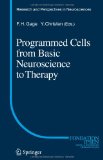
PROGRAMMED CELLS FROM BASIC NEUROSCIENCE TO THERAPY


AUTOR: ; ND
 
 
  • Portada de PROGRAMMED CELLS FROM BASIC NEUROSCIENCE TO THERAPY

    9783642366475

 
Compartir: Compartir con un amigo de biblioeteca Compartir por email Compartir en Facebook Compartir en X Capturar código QR Añadir RSS

Sinópsis del libro:

  • The recent advances in Programming Somatic Cell (PSC) including induced Pluripotent Stem Cells (iPS) and Induced Neuronal phenotypes (iN), has changed our experimental landscape and opened new possibilities. The advances in PSC have provided an important tool for the study of human neuronal function as well as neurodegenerative and neurodevelopmental diseases in live human neurons in a controlled environment. For example, reprogramming cells from patients with neurological diseases allows the study of molecular pathways particular to specific subtypes of neurons such as dopaminergic neurons in Parkinson?s Disease, Motor neurons for Amyolateral Sclerosis or myelin for Multiple Sclerosis. Detecting disease-specific molecular signatures in live human brain cells, opens possibilities for early intervention therapies and new diagnostic tools. Importantly, once the neurological neural phenotype is detected in vitro, the so-called ?disease-in-a-dish? approach allows for the screening of drugs that can ameliorate the disease-specific phenotype. New therapeutic drugs could either act on generalized pathways in all patients or be patient-specific and used in a personalized medicine approach. However, there are a number of pressing issues that need to be addressed and resolved before PSC technology can be extensively used for clinically relevant modeling of neurological diseases. Among these issues are the variability in PSC generation methods, variability between individuals, epigenetic/genetic instability and the ability to obtain disease-relevant subtypes of neurons . Current protocols for differentiating PSC into specific subtypes of neurons are under development, but more and better protocols are needed. Understanding the molecular pathways involved in human neural differentiation will facilitate the development of methods and tools to enrich and monitor the generation of specific subtypes of neurons that would be more relevant in modeling different neurological diseases.

    Idioma: INGLÉS


Clasificador

Según nuestros usuarios

RIGUROSO
Riguroso

Determina lo preciso o impreciso que es este libro con respecto a lo que se cuenta en el mismo. 0 significa que es completamente impreciso y 10 que cuenta es rigurosamente verídico

Más información
DIVERTIDO
Divertido

Determina lo divertido que te ha resultado el libro: 0-aburrido 10-muy divertido

Más información
COMPLEJO
Complejo

Determinamos lo complejo que nos ha resultado la lectura del libro. Desde el nivel más bajo, que indica que es un texto secillo de comprender hasta el valor máximo que indica que es complejo de comprender

Más información
SORPRENDE
Sorprende

Indica lo sorprendente que resulta el argumento del libro, desde 0: previsible hasta 10: totalmente desconcertante y sorprendente

Más información


Etiquetas de otros usuarios

Así han etiquetado este libro más usuarios

Así han etiquetado otros usuarios este libro. Si ves acertada su elección puedes añadir la etiqueta con un simple clic a tus etiquetas

 
Publicidad Baliza v16 Baliza v16


Comentarios de los lectores


Yo Leo

Información para lectores

Anillo de blogs

¿Tienes un blog?

Paga si te gusta

La forma de pago del futuro...

BiblioEtecarios

Ayudanos con los libros

Yo Escribo

Si eres autor, descubre más...

Ayuda

Todo lo que puedes hacer en la web
C/ Mayor, 50, 2C.
28921 Alcorcón (Madrid)
Tel/Fax : 91 288 73 76
E-mail : info@biblioeteca.com

BiblioEteca en Rss

 
Copyright © 2026 BiblioEteca Technologies SL - Todos los derechos reservados